


Using Regenerative Design to Revitalize NEWPORT BANNING RANCH – By Jack Eidt
In September 2016, the California Coastal Commission, after thirteen hours of testimony and deliberations, denied Newport Banning Ranch LLC (NBR) their bid to create a mega-resort and residential village on a present/former oilfield overgrown with state protected Environmentally Sensitive Habitat populated by rare or endangered wildlife. Next step would be devise a plan that would integrate the environmentally sensitive habitat into a residential resort community using Regenerative Design. Check out the concept plan put forth by Wild Heritage Planners, Architect Carl Welty, and Landscape Architect Blake Whittington. READ MORE...
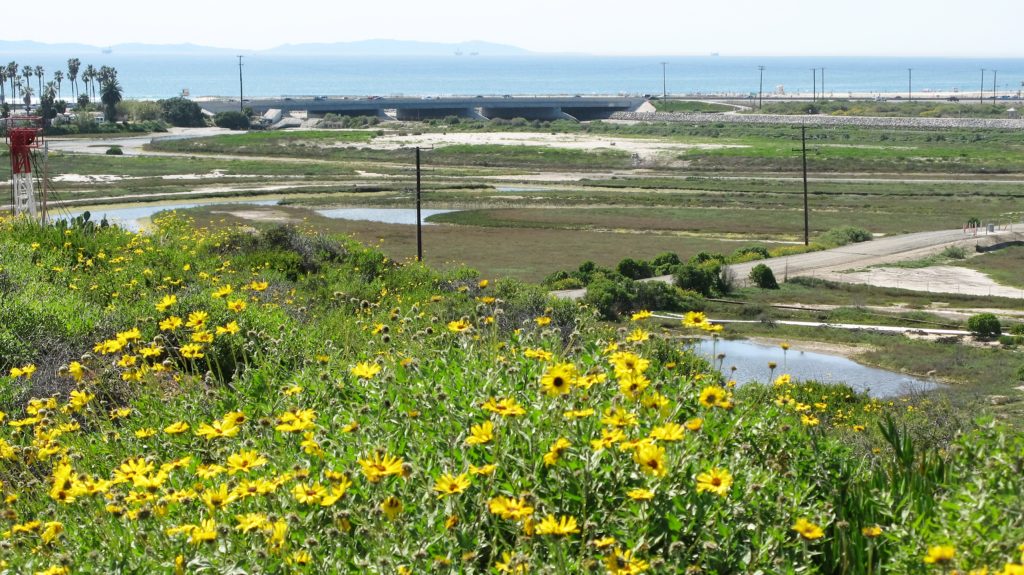 Any development on Newport Beach's Banning Ranch should protect and restore the important wetland and bluff areas covered with Environmentally Sensitive Habitat. Banning Ranch habitat images by Nature Commission.
__________________________________________________________
How to Legalize Building and Living in TINY HOUSES
Tiny Houses, although lauded as a green way forward in a world covered in wasteful McMansions and debt enslaving rent payments, must overcome health, safety, and building standard regulations that still consider this form of housing either illegal or difficult to approve. Alyse Nelson charts a way through the red tape. READ MORE...
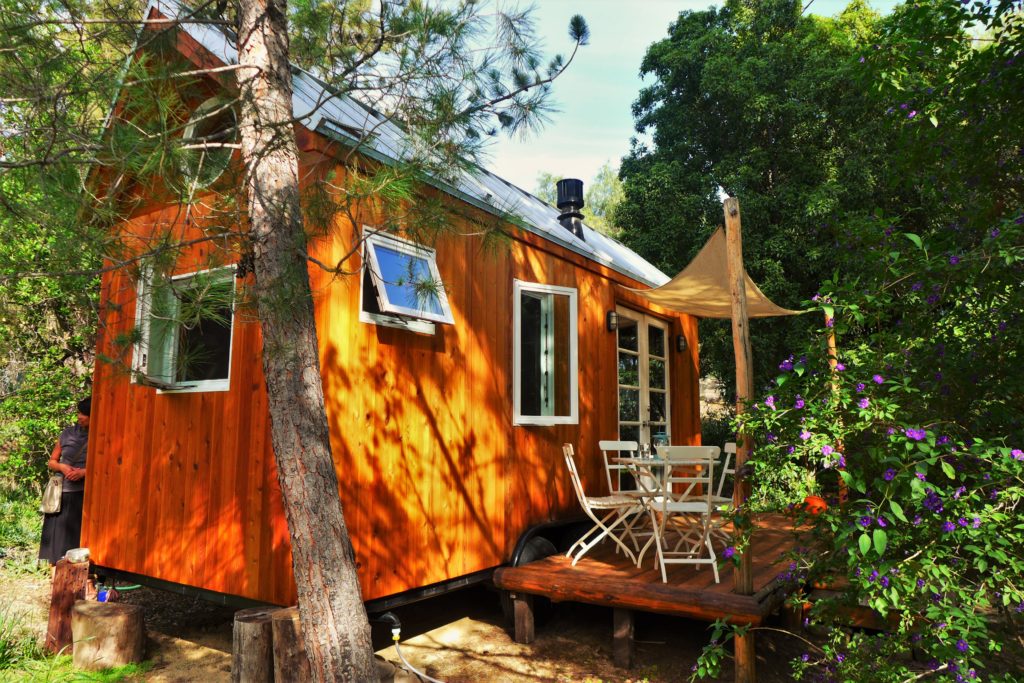 Ranging from 800 square feet to less than 100 -- much below the North American norm -- these “tiny homes” can house a diverse lot: for people seeking transitional and permanent affordable choices in desirable communities, for the many interested in "living green" in a small space, and others seeking shelter closer to family or friends. Photo: Architect Vina Lustado's
__________________________________________________________
SHIPPING CONTAINERS as Sustainable, Affordable Housing?
Can re-purposed shipping containers become the next inexpensive, quick to construct, green building solution for affordable housing? Danish “starchitect” Bjarke Ingels, as well as a recent Orange County project, assert yes to all of the above, but there are limitations. READ MORE...
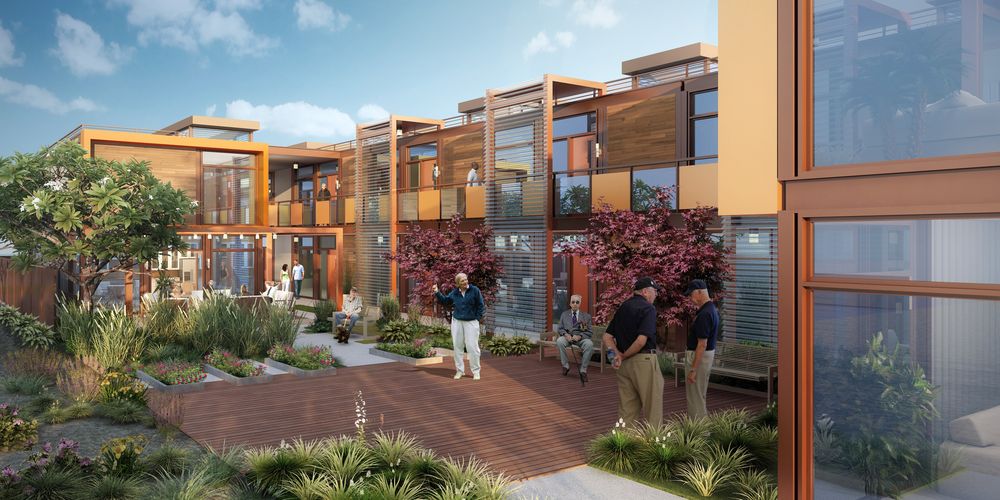 Potter’s Lane is under construction in Orange County, California, from re-purposed shipping containers. Here is an artist rendering from American Family Housing
__________________________________________________________
LOS ANGELES RIVER REVITALIZATION: A City Rediscovers its Flow – By Jack Eidt
The LA River, an over-engineered concrete "water-freeway," is undergoing a long-term greening and revitalization. The Council for Watershed Health held a recent symposium on the restoration and development challenges of the regional rediscovery of a long-maligned watershed. The planning for a 32-mile greenbelt, developed through numerous projects, promises to improve the health of the ecosystem and the value of the river as a regional public amenity, while managing flows and protecting properties. READ MORE...

__________________________________________________________
TRESTLES BEACH: National Treasure or Toll Road Off–Ramp? By Jerry Collamer
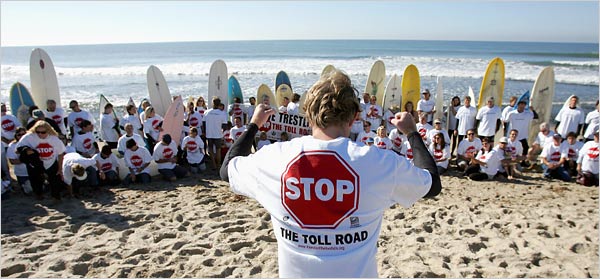
San Onofre and Trestles have been synonymous with California surfing since the 1930s. The area is world-renowned for its consistent, near perfect waves. A movement to pave over the park and beach with a toll road was rejected by the California Coastal Commission and Federal Commerce Department in 2008. We now have the opportunity to have it recognized for its historical contributions by being listed in the National Register of Historic Places, and stop that toll road project for good.
Meanwhile, the State Water Boards will decide June 19th whether to grant a permit for the road to dump contaminated runoff into San Juan Creek (the first phase) and keep the dream alive of paving over Trestles. Please attend in San Diego! For More Info - click here. READ THE ARTICLE...
__________________________________________________________
Wild Heritage Planners is a consultant and advocacy organization dedicated to improving urban centers and existing neighborhoods through smart growth and sustainable environmental planning, formulating transportation alternatives, while preserving wilderness and open spaces.
WHP collaborates with local and regional governments, land developers, non-profits, neighborhood groups, and private citizens to offer educated and balanced solutions to environmental and urban growth issues that maximize public benefit while protecting property rights and sensitive habitats.

__________________________________________________________
WIN:WIN JOURNAL: Re–Imagining Los Angeles
Jack Eidt has an essay in the Westside Branch of LA's USGBC Journal, WIN:WIN “The Future, a Sustainable Los Angeles” – Which questions how does Los Angeles, its people, buildings and infrastructure, establish a restorative, long-term relationship with its environment and the financial systems that support it? Check out the inaugural issue at http://winwinjournal.com/.” READ MORE...

__________________________________________________________
KEYSTONE XL TAR SANDS PIPELINE: 40 SoCal Groups Call for Environmental Rethink
The State Department issued a flawed environmental review of the proposed Keystone XL pipeline that ignores its far-reaching impacts on climate and our environment. Jack Eidt, working with Tar Sands Action Southern California, has prepared a commentary on behalf of 40 groups submitted to the State Department demanding a comprehensive reassessment of the significant and irreversible impacts on the environment not taken into account in the draft report released on March 1st. President Obama and Secretary of State Kerry will be making a determination later this year whether the project is in the interest of the US. We say definitively NO!” READ MORE...

__________________________________________________________
A LOS ANGELES RAIL~VOLUTION: A City in Sustainable Transition – By Jack Eidt
The national four-day Rail~Volution 2012 Conference rolled into Hollywood recently, promising multi-modal transportation alternatives that create living, walking and working centers through public transit. Energized and inspired by the dialogue of hundreds of community activists, planning professionals, agency representatives, developers and visionaries, LA Metro seeks to speed construction of a dozen planned transit projects. READ MORE...

__________________________________________________________
HELLO URBANISM: Southern California Sprawl Grows Up
GOODBYE SUBURBAN SPRAWL: Southern California Sustainable Communities Strategy Plan is a Long-Term Model for Sustainability. Rick Cole of Ventura: “…. SCAG’s new plan is born of the realization that as a region, we have to grow up, not out. That doesn’t mean Hong Kong skyscrapers in Whittier and Redlands. It does mean more apartments near light-rail stations and more vibrant mixed-use areas like the ones in downtown Pasadena, Ventura and Brea. It doesn’t mean wresting the car keys from suburban commuters. It does mean making jobs and housing accessible via foot, bike, bus and rail.” READ MORE...
_____________________________________________________
DISASTER ROULETTE: EARTHQUAKES AND NUKES AT SAN ONOFRE
IT CAN'T HAPPEN HERE? Southern California Edison (SCE) officials and academic seismologists, have claimed the earthquake-tsunami-meltdown-disaster could never happen here. The plant is designed for a 7.0 temblor and Japan's 8.9 and the associated tsunami are "highly unlikely." Consider, however, a study from 2008 by the Caliornia Energy Commission called an "Assessment of California's Nuclear Power Plants, AB 1632 Report." It states that the region could experience larger and more frequent earthquakes than had been anticipated when the plant was designed, due to the late discovery of underground “blind thrust” faults. It goes on to recommend further study to characterize the seismic hazard, since less is known about the seismic setting than more fully studied Diablo Canyon (yet still deeply risky) in Central California. Read the full piece on our website: WilderUtopia.com. Also featured in CounterPunch.org.
_____________________________________________________
DISASTER IN THE GULF OF MEXICO ILLUSTRATES THE RISKS OF OFFSHORE DRILLING - GOVERNOR SCHWARZENEGGER BACKS DOWN FROM PXP-TRANQUILLON RIDGE PROPOSAL FOR THE SANTA BARBARA COAST
The harsh reality of the oil blowout-sunken rig disaster in the Gulf convinced Governor Schwarzenegger to withdraw his support for the bid by Plains Exploration and Production Company (PXP) for the first new offshore drilling lease in the California Coastal Tidelands Sanctuary in 41 years. The proposal for Tranquillon Ridge, Santa Barbara County, would have been a bad deal for the State of California, with major risks to coastal economies and ecosystems without assurance of the purported benefits; as well, it most certainly would have led to increased drilling at a beachfront near you. Read the opinion-editorial piece by Jack Eidt in the Orange County Register here We laud the Governor's decision and welcome a broader dialogue with actors on the many sides of the debate. We can only hope this horrible tragedy unfolding on the Gulf Coast, coupled with the continuing climate change discussions and the coming scarcity of dirty dangerous fossil fuel supplies, will inspire the creation of a clean, renewable, and sustainable national energy portfolio.
On January 29, 2009, the California State Lands Commission, headed by Lieutenant Governor John Garamendi and Controller John Chiang, voted down a proposal by PXP and Santa Barbara environmental groups to slant drill about eighteen new wells from existing Platform Irene into the state waters. PXP promised a $100 million up-front "signing bonus" and a couple of billion dollars for state and local coffers over the life of the project. As well, they pledged to close operations at four platforms and two onshore processing plants within 15 years, donate 4,000 acres of land in Lompoc and Gaviota, and contribute $1.5 million towards hybrid buses. After the State Lands staff found the deal to have unenforceable end dates, many questions about title on donated lands, and significant concerns about oil spills and blow-outs on the coastal ecosystem, the commission voted 2-1 against the proposal.
Not least of the issues is the political precedent of allowing the first drilling in the state sanctuary since the Santa Barbara spill in 1969. Though proponents of the deal claim that this would have been a one-time exception, Californians must face the reality that offshore drilling leases will be offered in state waters from Mendocino to La Jolla as soon as it is again politically feasible. Though the moratorium against drilling in the federal Outer Continental Shelf is in effect until 2017, this can be repealed or reconsidered should the political winds change.
The false assertion that new technology has made oil blowout disasters a thing of the past was made painfully clear by recent events, a repeat of the massive spill from the West Atlas Rig in the Timor Sea off the magical West Australian Kimberley Coast during August through October of 2009. No end is yet in site for the Gulf Coast, its fisheries, ecosystems, tourist industry: the entire coast is now threatened with the spewing of hundreds of thousands of gallons of oil creating a slick the size of Connecticut and Rhode Island. Because of the logistics involved, the gushing oil cannot be capped for possibly months, severely impacting migrating whales and turtles and causing an expensive clean-up with no guarantee of sopping up the crude.
See Jack Eidt featured in University Link Magazine regarding WHP's opposition to the Tranquillon Ridge Proposal.
Read the letters published by Wild Heritage Planners and the organized opposition to the original deal in the Santa Barbara Independent...
http://www.independent.com/news/2009/mar/19/state-lands-was-right-reject-slant-drilling-deal/
http://www.independent.com/news/2009/mar/12/no-deals-oil/
_____________________________________________________
TEJON RANCH: A SPRAWL TOO FAR?
On October 5, 2009, the Kern County Board of Supervisors voted 5-0 to approve the Tejon Mountain Village (TMV) Specific Plan, the first phase and most environmentally damaging part of the largest development project ever proposed in the State of California by an LLC composed of the Tejon Ranch Company and DMB of Scottsdale, AZ.
The TMV Specific Plan endeavors to build 3,450 homes (including condominiums, apartments, and townhouses) in a private gated community on lots ranging from 6,700 square feet to over 20 acres. They also seek authorization for 160,000 sf of commercial buildings, 750 resort hotel rooms, two heliports, two 18-hole golf courses and about 320,000 sf of support space for commercial amenities.
All of this is slated for ridges and hillsides mapped by the US Fish and Wildlife Service (FWS) as Critical California Condor Habitat, including flight pathways, the only significant feeding area close to the Sespe-Piru nesting site, and the Tejon deer herd -- a forage source for the wild population. In 1987, there were only 22 condors left in the world, and after the most aggressive effort to bring an endangered species back from the brink of extinction, the Condor Recovery Program has increased the population of wild birds to 188 in California. Protection of critical habitat is integral to the bird's continued survival. The FWS still has not approved Tejon's Habitat Conservation Plan and Incidental Take Permit and is not expected to do so anytime soon.
The project also threatens to overwhelm Interstate 5 with traffic; poses serious questions about water availability; impacts Native American sacred sites; will expose thousands of new residents and millions of dollars of real estate to serious threat of wildfire destruction as residents of the neighboring Angeles National Forest can attest; and begs the question how much more can we stress our environmental sustainability as our urban boundaries continue to encroach on the already encroached-upon wildlands. The Center for Biological Diversity along with local groups have filed suit against the Kern County decision.
An agreement in April 2008 between five major environmental groups and the Tejon Ranch Company has arranged for the long-term preservation of 90 percent of Tejon Ranch, the largest contiguous privately-owned piece of land in California, 270,000 acres, located 100 miles north of downtown Los Angeles. Comprising four distinct bioregions, where the Sierra Nevada rolls into the coastal range, and the San Joaquin Valley and the Mojave Desert join together across 7,000 foot mountains, its protection is the keystone to California's natural legacy, and is a significant achievement.
As part of the deal, however, the groups have agreed not to oppose major development projects proposed for the remaining 10 percent of the Ranch. These include in addition to Tejon Mountain Village, the massive Centennial, 23,000 homes or maybe 70,000 new residents to the highlands, and the I-5 Tejon Industrial Complex. See http://www.tejonpreserve.com/ for details. WHP asserts that these projects would not only spell jeopardy for the condor, but the regional environmental sustainability of Southern California as well. See WHP's response in the LA Times to this destructive urban sprawl, the press release from the Center for Biological Diversity, and the original article in the Times. See also www.savetejonranch.org/
--------------------------------------------------------------
TRESTLES BEACH AND THE SAN MATEO WATERSHED SAVED 9FOR NOW)!
COMMERCE DEPARTMENT UPHOLDS COASTAL COMMISSION DECISION TO DENY THE EXTENSION OF THE SR 241 TOLL ROAD THROUGH SAN ONOFRE STATE PARK.
The Department of Commerce denied the bid by the Orange County Transportation Corridor Agency to override the California Coastal Commission's decision last February denying the Coastal Consistency Permit for the SR 241 toll road extension. Federal officials could only override the state's decision if the project had no alternatives or was necessary to national security, and the announcement on December 18, 2008 said neither of those criteria were met.
The Coastal Zone Management Act, approved in 1972, was designed to protect endangered species, wetlands, archaeological sites, public access, and recreational resources. Proposed through San Onofre State Beach and the Donna O'Neill Land Conservancy, the Coastal Commission did not consider the merits of building a new road worth destroying a popular campground, a world class surfbreak, the Native American sacred site of Panhe, and a wilderness conservancy protecting one of the last undeveloped watersheds in Southern California. Wild Heritage Planners has worked with the TCA, the Orange County Transportation Authority (OCTA), as well as all local and regional governing bodies to identify alternatives that would preserve state park and wilderness areas while providing for future mobility given the proposed 14,000-home Rancho Mission Viejo project slated for inland South Orange County.
Please click here and here for WHP's alternative vision for South Orange County Transportation.
See http://www.savetrestles.com/
http://morecollamer.blogspot.com/